
Since the first edition of the Copenhagen-based newspaper Politiken was published in 1884, aesthetics – visual beauty – has been at the core of what the publication strives for. And with the advent of digital platforms, the opportunities have helped to create a new dimension in traditional journalism.
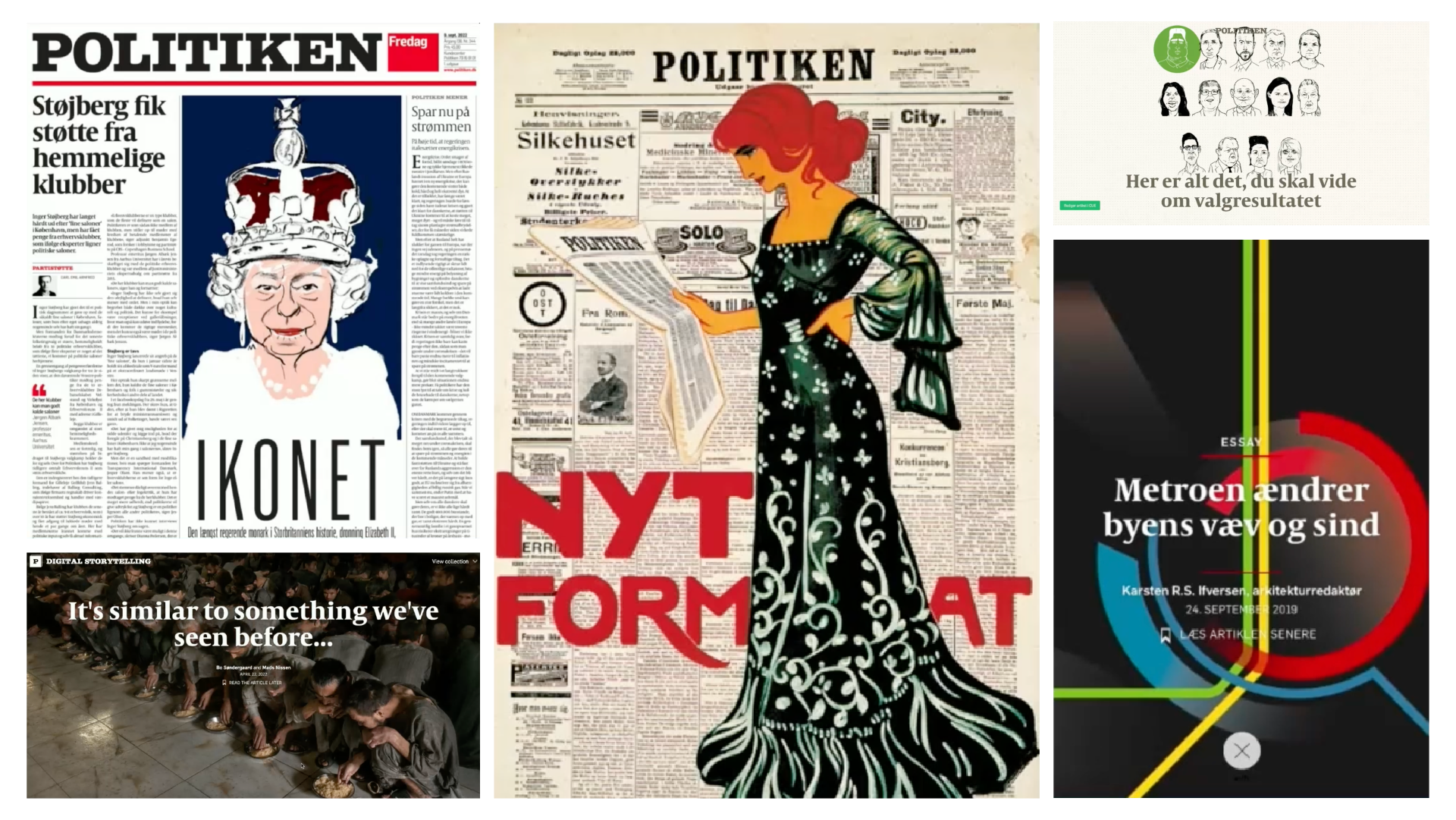
Politiken’s “super articles” are scrollable feature articles where text, video, graphics, photography, and layout each have their own role to play – and at the heart of this is a digital workflow.
More than just a sprinkle of design
The digital workflow Politiken uses is based on the Cue media enterprise platform and is the true vehicle of digital beauty at Politiken – and it is so much more than just design.
“You can’t just sprinkle nice artwork on top of your content. That is not true digital beauty,” Johannes Skov Andersen said. “Everything begins with the idea, and the idea must involve everyone who is involved in creating the story: Photographers, motion graphic designers, journalists, editors and so on. We co-create our stories, starting with a storyboard created by all involved”.
Based on the Cue platform, the Politiken Digital Storytelling team has built a workflow that easily incorporates interactive video content, written content, infographics, etc., allowing everything to become truly integrated into the final super article – quickly.
“We know that our super-articles drive engagement and conversions,”
Troels Behrendt Jørgensen
Digital Director at Politikken
Andersen also showed how Politiken is using the methods from “super articles” to unleash creativity in the rest of the newsroom: “A good template for digital storytelling can unleash creativity from everyone in the organization. And our templates can be used for smaller content items as well,” he said, naming the foreign desk or the politics desk as departments that have used the same templates to create visually engaging content for smaller news items.
Quality that drives engagement and innovation
Jørgensen and Andersen pointed out that the workflow needs to be made for this kind of content production. And producing this type of content is costly, but it pays off in more ways than one.
Firstly, Troels Behrendt Jørgensen pointed out that Politiken would not spend so many resources on creating this type of high-end content if it did not make sense for the business. Although Politiken has released more than 40,000 articles over the past couple of years, only approx. 100 of these can be termed super-articles, but their relevance is far higher than their number would indicate.
“We know that our super-articles drive engagement and conversions,” Jørgensen said.
“In fact, page impressions are more than three times as high for super articles than the average of the rest of our content, and engagement is twice as high. This also means that sales are higher – the average sales per super article is 4.7 compared to 0.6 for all other articles, meaning that for each super article we produce, we get almost five new paying customers each time. We also know that in terms of retention, subscribers who have read at least one of our super articles are more likely to have a higher loyalty score than those who do not,” he said.
But the value is not restricted to sales and customer retention: “The true value of our use of super articles is that it drives innovation in the newsroom,” Jørgensen said.
“These stories inspire the whole organization by showcasing the possibilities of digital storytelling within the Cue platform. It demonstrates to the rest of the newsroom that a digital transformation can be fun and worth the effort.”