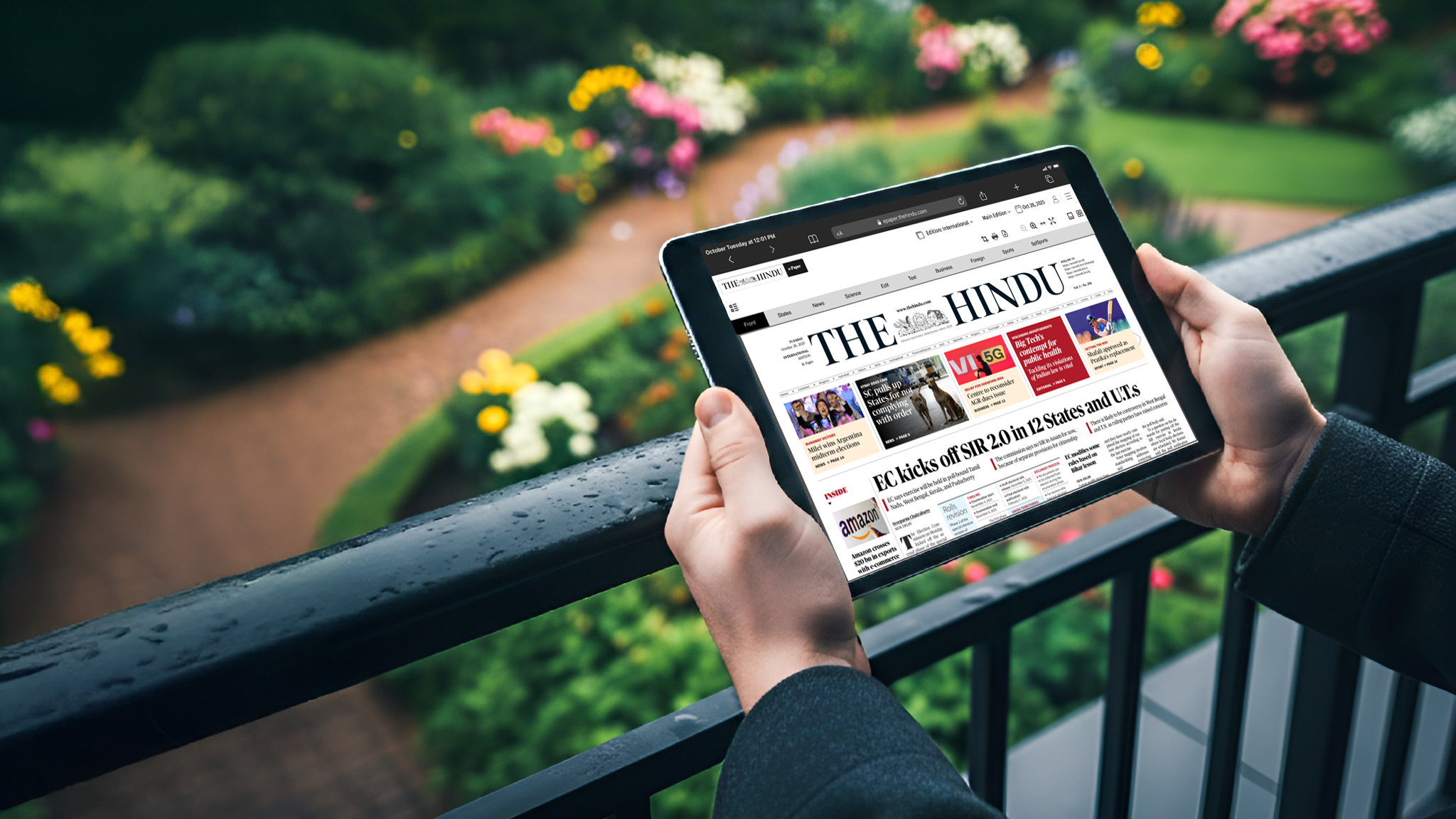

The digital asset management system Cue Dam is now the central storage location for The Hindu’s editorial staff. This is where all editorial content is gathered and managed centrally for all channels in the cloud, location-independent. The fast search as well as the workflow and rights management capabilities in Cue Dam form the basis for a flexible and cross-editorial handling of all data.
Preserving valuable data
The Hindu’s editorial team emphasizes the importance of importing the historical newspaper archive, which dates back to 1881. Thanks to automatic text recognition with OCR, the scanned newspaper pages are now fully keyworded. Thus, content and stories from old issues before the digital era can be found quickly and easily through searches in Cue Dam.
“Cue Dam will be the central repository for all our digital assets which can be accessed seamlessly from within the Cue platform itself by the editorial staff, as they work on developing a story.”
Suresh Vijayaraghavan
Chief Technology Officer, The Hindu
Images and more available on the go
High performance, scalability, redundancy, and maximum data security are guaranteed thanks to the architecture of Cue Dam and its cloud environment. The digital asset management system combines various software solutions via several interfaces and thus offers an optimal basis for The Hindu’s digital data management.
5 reasons an integrated Dam is important to The Hindu
1. To unify a fragmented content ecosystem
The Hindu’s assets were siloed across disparate systems, creating significant workflow inefficiencies. Sharing content between publications or repurposing assets for different channels was a cumbersome process that hindered collaboration between photographers, video editors, and reporters.
Cue Dam delivered a single, central archive, consolidating all of The Hindu’s content onto one unified platform. This centralized platform provides a searchable, accessible repository for every asset, including entire print editions, effectively breaking down content silos.
With a single source of truth, content creators can now easily find, share, and repurpose assets. This has streamlined cross-publication workflows and fostered a more collaborative environment, allowing teams to build rich, multimedia stories more efficiently.
2. To streamline the entire content lifecycle
The lifecycle of an asset, from creation and approval to publication and archiving, was disjointed. Manual processes, such as creating multiple variants of an image for print and web, consumed valuable time and resources, slowing down the pace of time-to-publish.
Cue Dam integrated seamlessly with The Hindu’s print publishing system and online CMS, automating the entire content workflow, as they chose to opt-in for the entire Cue media enterprise platform during the onboarding to Cue Dam. The DAM intelligently manages the relationships between assets and automates the creation of renditions (variants) for different channels, such as lower-resolution images for web or previews for videos.
The automation of routine tasks has significantly accelerated editorial workflows. “An asset has its own life cycle,” notes Vijayaraghavan. “This whole life cycle needs to be handled through the DAM.” Now, content moves smoothly from creation to distribution, freeing up creators to focus on high-value work.
3. To enhance collaboration across a distributed team
With content creators working across different geographic locations and departments, effective collaboration was a constant challenge. The lack of a centralized platform made it difficult for journalists, photographers, and editors to contribute to stories and share assets seamlessly.
By providing global access to all content creators, Cue Dam dismantled geographical and departmental barriers. The platform enables teams to collaborate in real-time, sharing assets and contributing to stories from any location. It also simplifies the process of syndicating content to external partners.
The Hindu now operates with a more agile and connected workforce. Enhanced collaboration has improved the quality and speed of content production, allowing the media organization to respond more dynamically to breaking news and market demands.
4. To future-proof operations with AI-driven intelligence
With over 80 million assets (in 2022) and growing, finding specific content was like searching for a needle in a haystack. The media organization’s vast archive was at risk of becoming a “black box,” making it nearly impossible to leverage valuable historical content effectively.
Cue Dam’s ability to integrate AI was a decisive factor. The system automates metadata enrichment through AI-driven image analysis, dynamic keyword generation, and speech-to-text transcription. This intelligent tagging makes millions of assets instantly discoverable. Vijayaraghavan states, “Today, any asset management system that does not work on top of an AI engine is actually useless.”
The AI-powered search capabilities have unlocked the full value of The Hindu’s extensive archive. Assets are now easily discoverable and ready for reuse, providing a strategic advantage and maximizing the return on investment and usage per asset.
“Today, any asset management system that does not work on top of an AI engine is actually useless.”
Suresh Vijayaraghavan
Chief Technology Officer, The Hindu
5. To ensure scalability and robust rights management
The Hindu needed a solution that could not only manage its (in 2021) 45 million assets but also scale to handle exponential growth in future years. Furthermore, managing complex usage rights, copyrights, and embargos for a massive volume of assets was a critical but daunting task.
Cue Dam was built to manage massive scale, ensuring The Hindu is prepared for future growth. The platform also provides a sophisticated framework for rights management, allowing for precise control over asset access and enforcement of usage restrictions, embargos, and expiration dates.
With a scalable and secure DAM, The Hindu is confident in its ability to manage this growth while maintaining complete control over its valuable content.
A strong partnership conquers all
The entire implementation of Cue Dam at The Hindu was run remotely. Due to the COVID-19 pandemic, no face-to-face meetings took place. With intense communication and dedicated project teams on both sides, the project could be implemented successfully despite the challenging situation.
“As of today (March, 2022), The Hindu has more than 80 million assets sitting on the asset management system, and it is going to only double and triple.”
Suresh Vijayaraghavan
Chief Technology Officer, The Hindu
The project on Cue Dam laid the foundation for The Hindu to expand into the remaining Cue media enterprise platform, with the next step being onboarding to the editorial CMS, called Cue Content Store and later Cue Print.
The DAM migration project was completed in 9 months and in total the migration to the entire Cue media enterprise platform took 18 months. The project succeeded through a collaborative effort between The Hindu’s team and the Stibo DX Professional Services team.
“As of today, The Hindu has more than 80 million assets sitting on the asset management system, and it is going to only double and triple,” says Vijayaraghavan. With a scalable and secure DAM, The Hindu is confident in its ability to manage this growth while maintaining complete control over its valuable content.
Explore Cue Dam and its ability to support your media operations.